Leadership Messages

Thank you for your interest in the Anesthesiology Residency Program at Cooper University Health Care. Choosing a residency program is one of the most important decisions of your professional life. It extends far beyond clinical training—it is about joining a community of faculty, mentors, and colleagues who will challenge, support, and inspire you as you develop into the skilled, compassionate anesthesiologist you aspire to become.
Our fully accredited, integrated four-year program provides comprehensive clinical training within a close-knit department. We pride ourselves on fostering a collegial and supportive learning environment across a wide variety of clinical and didactic settings. Through an emphasis on professionalism, collaboration, and teamwork, our residents develop into skilled anesthesiologists prepared to assume leadership roles in both academic medicine and private practice.
Cooper University Hospital is a Level I Trauma Center located in Camden, New Jersey. The continued expansion of our health system includes MD Anderson Cancer Center at Cooper, a state-of-the-art cancer center where residents gain experience caring for patients undergoing complex oncologic procedures. Our clinical training opportunities have also expanded to include two new ambulatory surgery centers—Cooper University Health Care Surgery Center at Moorestown and Cooper BMA—providing residents with additional experience in high-quality, efficient outpatient anesthetic care. Our accomplished faculty contribute to research, publications, and presentations at regional and national conferences, including the annual meetings of the American Society of Anesthesiologists and the New Jersey State Society of Anesthesiologists. Their varied backgrounds in academic medicine and private practice enhance the program’s educational environment.
At Cooper, patient- and family-centered care is our highest priority. Residents train alongside multidisciplinary teams caring for patients with complex illnesses and benefit from expert instruction in transesophageal echocardiography, point-of-care ultrasound, ultrasound-guided regional anesthesia, critical care medicine, simulation, and chronic pain management.
We consistently recruit exceptional candidates to our residency program. We train ten residents in each clinical anesthesia year, allowing us to provide individualized attention, close faculty mentorship, and progressively increasing clinical responsibility. Our residents have achieved outstanding clinical and academic success. Residents are also encouraged to participate in research and other scholarly activities, with opportunities to present their work at regional and national meetings and contribute to peer-reviewed publications. Approximately 50% of our graduates pursue fellowship training.
Resident well-being is an important program priority. We carefully monitor clinical and educational work hours, promote a supportive learning environment, and remain committed to full compliance with ACGME requirements. Our program strives to provide rigorous and comprehensive clinical training while supporting residents’ personal well-being and professional development.
These are only a few of the features that distinguish our residency program. We hope you will consider Cooper as you evaluate residency programs and determine where you would like to continue your professional and personal development. We look forward to introducing you to our faculty, residents, comprehensive clinical training opportunities, and supportive learning community.
Irwin Gratz, DO
Residency Program Director
Professor of Anesthesiology
Gratz-Irwin@CooperHealth.edu
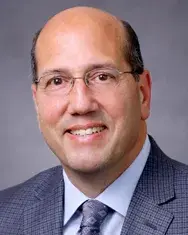
Thank you for your interest in the Anesthesiology Residency Program at Cooper Medical School of Rowan University (CMSRU)/Cooper University Health Care (CUHC). The Anesthesia Residency Program, fully accredited by the ACGME, started in 2004 and is led by our Program Director, Dr. Irwin Gratz, and our Associate Program Director, Dr. Keyur Trivedi. Our residents enjoy both excellent clinical training and formal didactic instruction. We are proud of our high board pass rate and 100 percent match rate.
As the largest academic medical center in southern New Jersey, our residents are exposed to myriad of clinical anesthesia experiences, including those for Trauma Surgery, Cardiac Surgery, Pediatric Surgery, Obstetric/Gynecological Surgery, Pain Management, Vascular Surgery, Thoracic Surgery, Robotic Surgery, Neurosurgery, Ambulatory Surgery, Orthopedic Surgery, Critical Care, and many others. Our clinical efforts are led by Dr. Ronak Desai who serves as our Vice Chair of Clinical Affairs. The diversity and acuity of clinical presentations and clinical needs of our patients provides a wonderful training environment for our residents. Residents are first oriented to the operating room through a deliberate immersion process that involves being paired with a senior resident for two months. Residents gradually gain clinical autonomy in a structured and supervised fashion.
Our formal didactic educational program at Cooper is excellent. CA-1 Residents benefit from an extensive introductory lecture series, especially designed for them. Regularly occurring formal didactic sessions continue throughout the training experience, featuring Case Management, Morbidity and Mortality, Journal Club, Mock Oral Reviews, Interdisciplinary Lectures, and Grand Rounds. Our educational efforts are strengthened by our MOCA-certified SIM Lab, where residents have the benefit of working with Anesthesia Faculty members that are nationally recognized SIM Lab experts. In fact, our Vice Chair of Faculty Affairs, Dr. Amanda Burden, is the Director of Simulation Education for both CUHC and CMSRU.
From an academic perspective, our department offers many opportunities. We are a department in the Cooper Medical School of Rowan University, and our entire faculty has academic appointments at the medical school. Our department is completely integrated into the fabric of the school, with our faculty participating in Medical Student Education through the Scholars Workshop Program, the Facilitated Learning Group Program, the College Advisory System, the general Mentorship Program, the Capstone Project Mentoring Program, the SIM Lab, the Graduate Medical Education Committee, and through medical student rotations through our department. Our departmental Vice Chair of Administrative Affairs, Dr. Erin Pukenas, is the Assistant Dean of Student Affairs at CMSRU. Our research efforts are led by Dr. Ludmil Mitrev, who serves as our Division Head of Research, and afford an opportunity for student and resident engagement in scientific inquiry. The department employs a full time Research Director and two full time Research Coordinators. Several of our faculty are ABA Board Examiners, and many hold important positions within national societies of anesthesiology.
We are very pleased that you are considering exploring the opportunity of joining our Residency Program. We feel that our residency experience is very strong from clinical, educational, and academic perspectives. Best of luck!
Alann R. Solina, MD
Professor and Chairman, Department of Anesthesiology, CMSRU
Chief of Anesthesia and Medical Director of Operating Room Services, CUHC


Hi, everyone! Thank you for taking an interest in the Cooper Anesthesiology Residency Program!
Our names are MK Carney and Chris McLoughlin. We are CA-3 Chief Residents and close friends. MK is from Cleveland, Ohio, and attended The Ohio State University, followed by Cooper Medical School of Rowan University. Chris is from South Philadelphia, Pennsylvania, and attended the University of the Sciences, followed by the Philadelphia College of Osteopathic Medicine. Throughout our medical school rotations, we realized that anesthesiology offered the best of both the medical and procedural worlds. We loved the hands-on aspects of being in the OR and providing direct patient care, combined with the critical thinking required to manage patients’ physiology, pathology, and anatomy throughout the perioperative period. We also saw firsthand the key role anesthesiologists play in caring for patients during important, vulnerable, and often life-changing moments—whether undergoing major cardiovascular surgery, experiencing life-threatening trauma, or welcoming a baby into the world. We knew we wanted to be a part of that.
We were both thrilled to match into the Cooper University Hospital Anesthesiology Residency Program. Cooper is a Level I Trauma Center and a major tertiary care hospital in the region, ranked among the top hospitals regionally and nationally across multiple specialties. As a result, residents experience a wide variety of cases while caring for a medically complex and diverse patient population. Our PGY-1 year is considered a transitional year because it combines both medical and procedural rotations. It concludes with one month of anesthesiology, providing a smooth transition into the CA-1 year. CA-1 year is designed to help residents build a strong foundation and prepare for CA-2 year, when exposure to the anesthesiology subspecialties expands. CA-3 year then provides greater flexibility to pursue elective rotations that can prepare residents for fellowship, an attending position, or simply allow them to further refine their skills in areas of interest such as regional anesthesia, outpatient anesthesia, TEE, difficult airway management, and more.
In addition to the excellent training at Cooper, we rotate at the Children’s Hospital of Philadelphia for two months during CA-2 year and one month during CA-3 year. There, we are exposed to truly unique cases and gain significant experience caring for children with complex and life-threatening illnesses and injuries. Learning opportunities are also abundant, with monthly M&M conferences, weekly didactic lectures, journal clubs, and simulation sessions. Our attendings genuinely care about resident education and foster a positive learning environment. Just as importantly, the residents support one another, help each other grow professionally, and develop close friendships throughout training. We are beyond grateful and honored to be part of this program.
If you have any questions, please feel free to reach out to us at carney-mary@cooperhealth.edu or mcloughlin-christoph@cooperhealth.edu. We are more than happy to help!
Sincerely,
Chris and MK
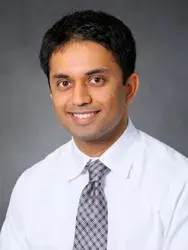
The Division of Patient Safety and Quality Clinical Effectiveness is responsible for oversight of the delivery of high quality, safe patient care in anesthesiology. The Division has led the department in achieving excellence in quality metrics related to value-based purchasing and pay-for-performance and has positively contributed to the composite safety scoring of the health system. The Division has created clinical and operational efficiency metrics to benchmark and improve upon processes that impact our patient care management and experience. The Division is consistently recognized for its work and commitment to patient safety. Our residents actively participate in quality projects and engage in principles of Lean/Six Sigma.
Our residents are an integral part of our Performance Improvement Committee and, over the course of their residency, learn about quality reporting, performance review, population health, perioperative surgical home principles, and perioperative safety initiatives. All residents work in teams and are required to participate in a quality improvement project for which they have received multiple awards and recognitions. Our faculty members are leaders in the development and implementation of several safety and quality endeavors, including critical events checklists, cognitive aids designed to improve team performance and patient outcomes, and improvements to perioperative handoff processes.
We have been among the first to publish a curriculum for resident handoff communication and to successfully execute processes to overcome safety barriers during patient care transitions in the ambulatory setting. Our faculty hold numerous positions in national leadership committees and organizations dedicated to safe patient care, including the Emergency Manual Implementation Collaborative, the Society for Pediatric Anesthesiology, the American Society of Anesthesiologists, the National Patient Safety Foundation, and the American Board of Anesthesiology.
Kinjal Patel, MD
Vice Chief/Vice Chair for Quality and HRO
Associate Professor of Anesthesiology, CMSRU